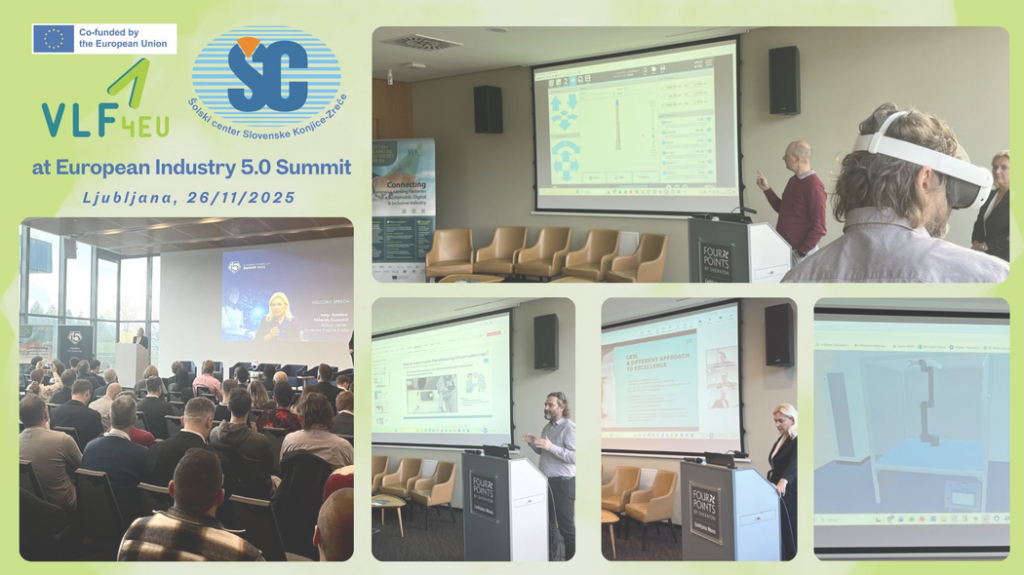
School Centre Slovenske Konjice–Zreče participates in the industry 5.0 Summit, highlighting the critical role of collaboration between education, research, and industry as a key driver of progress. As one of the secondary education institutions in Slovenia, the School Centre engages in this summit alongside leading experts and partners.
As an educational institution, we value cooperation with companies, the integration of young people into the workforce, and the development of skills that will be needed by industry in the future. It is essential that the paths of education, research, and industry intersect and complement each other.
Rapid technological development brings numerous new solutions, making learning with modern technologies increasingly important. Knowledge gained through interaction and simulations is more deeply anchored and enables a better understanding of complex processes. At the heart of Industry 5.0 is the human being – a sustainable, resilient, and human-centered industrial ecosystem where competencies go beyond technical skills to include digital literacy, social and emotional intelligence, creativity, and problem-solving abilities. The Summit feature numerous examples of best practices, knowledge transfer, technologies, and development approaches that shape the competencies of the future. Modern technologies are no longer merely a glimpse of the future; they have become essential tools for everyday learning, skills development, and preparing young people for the complex challenges of contemporary society.
The School Centre also presents the concept of Virtual Learning Factories, developed together with European partners. The VLF4EU project supports the digital and green transformation of industry, modernizes VET/HVET education, and strengthens research in small and medium-sized manufacturing enterprises. It establishes a network of Virtual Learning Factories that fosters competitiveness, innovation, and sustainable development, while developing an inclusive collaboration model, a modular architecture for virtual learning factories, and immersive training platforms. Special emphasis is placed on teacher training and the development of learning pathways and micro-credentials tailored to industry needs.
The summit showcase a digital twin solution that allows remote operation of a robotic arm via an XR interface. The system enables real-time visualization, interaction, and manipulation of the robot, demonstrating how modern technologies can bridge the gap between the virtual and real world.
Program is engaging, inspiring, and practical,” emphasizes the leadership of the School Centre. “It demonstrate how new technologies and skills development empower young people to become active co-creators of the future. Digital transformation addresses all generations – the younger, the middle, and those who have already contributed to shaping today. We are confident that we will shape the future together.”