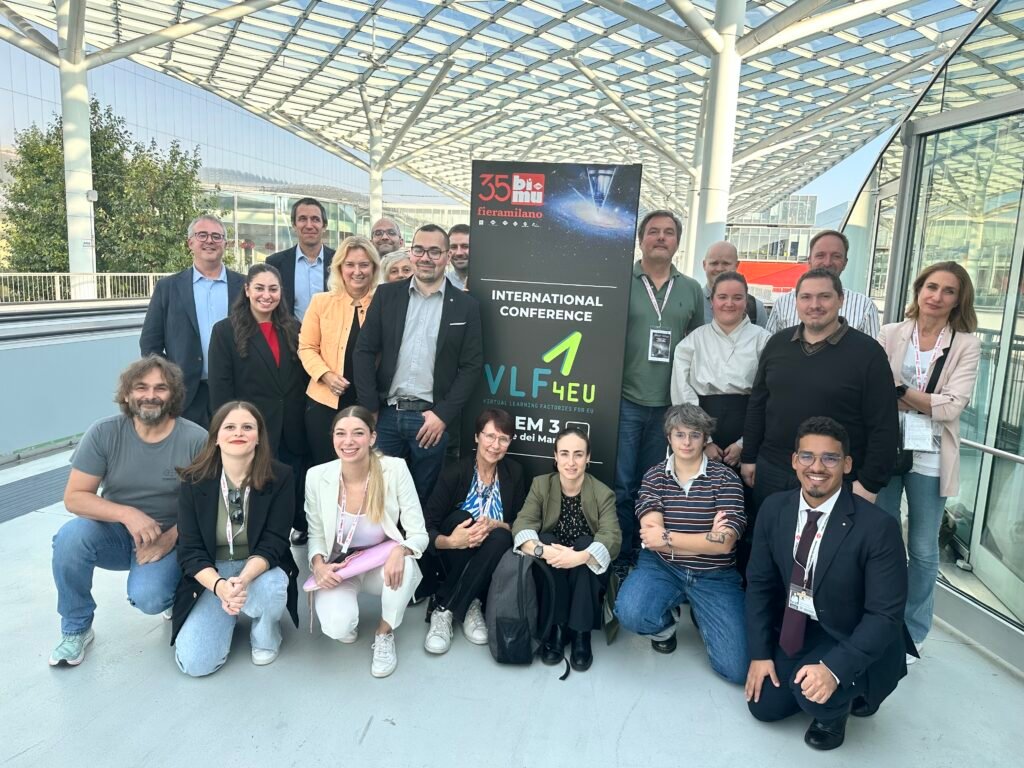
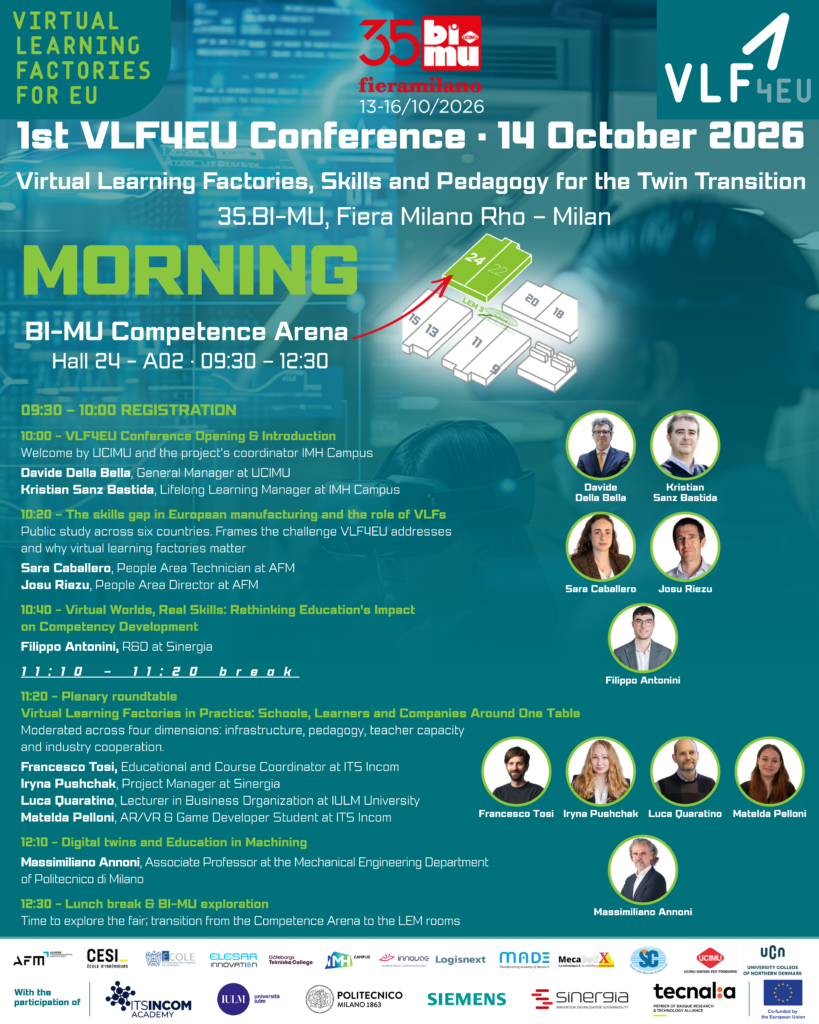
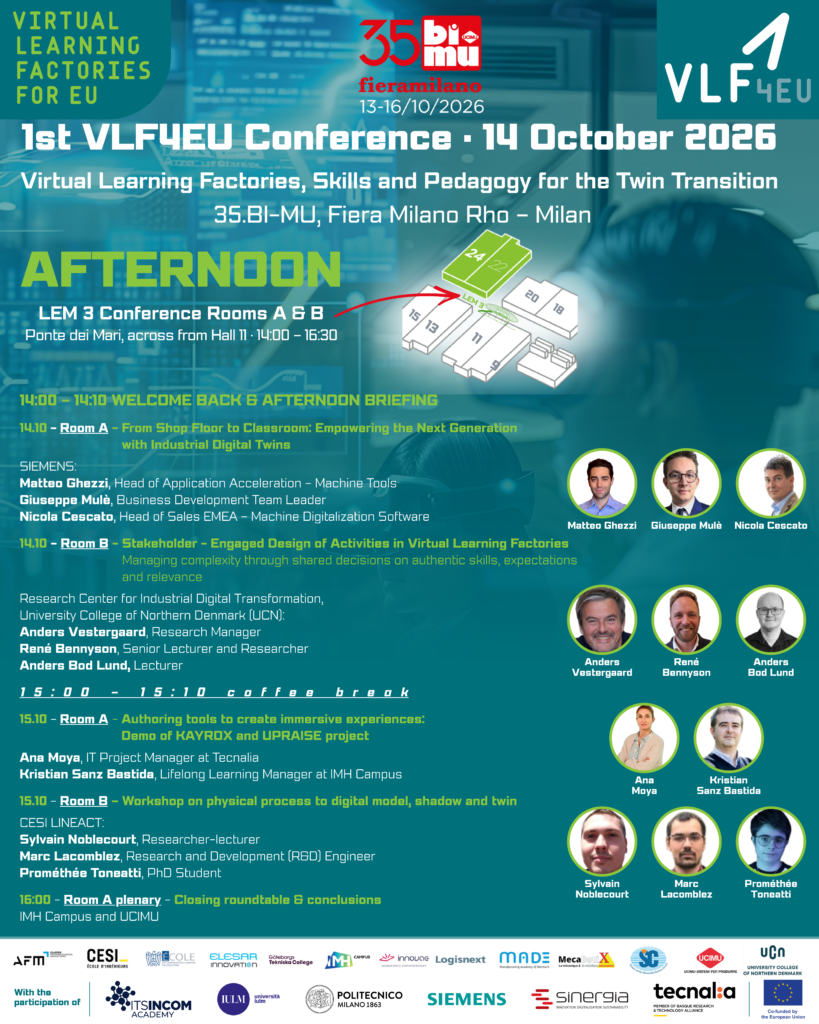
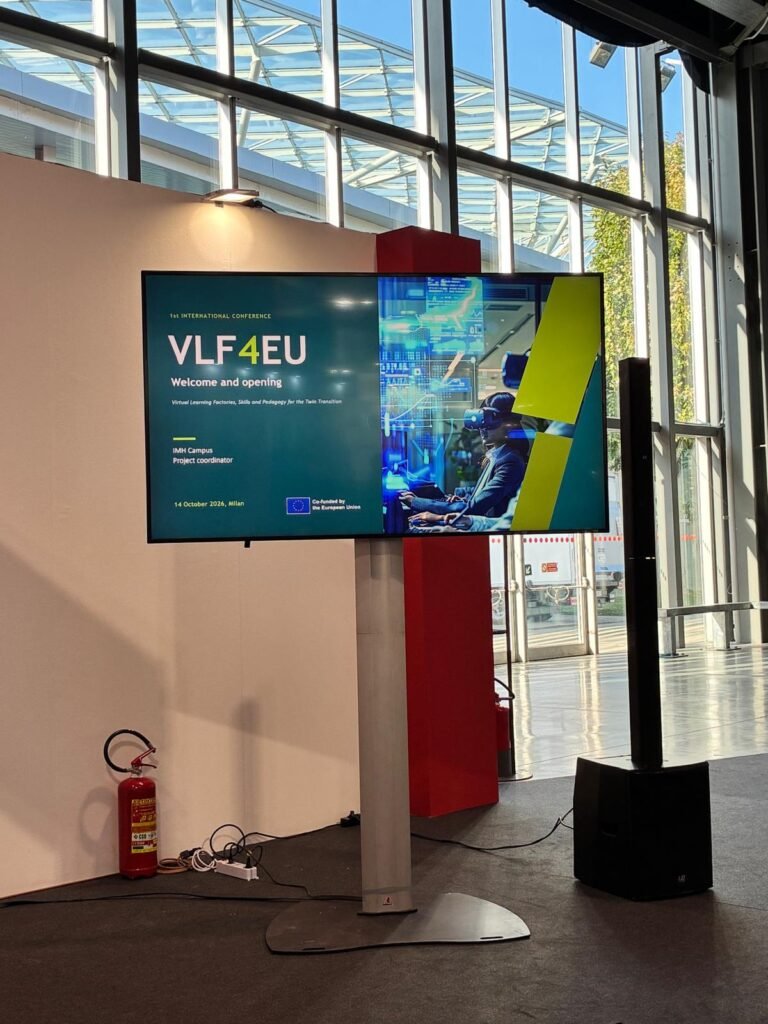
On 14 October 2026, the VLF4EU – Virtual Learning Factories for EU project held its 1st International Conference, “Virtual Learning Factories, Skills and Pedagogy for the Twin Transition”, within 35.BI-MU at fieramilano Rho, near Milan. Organised by UCIMU-SISTEMI PER PRODURRE, the association of Italian manufacturers of machine tools, robots and automation systems, the conference brought vocational schools, universities, technology companies and the consortium partners to the heart of the fair. The day was divided into two parts: a morning of talks and debate at the BI-MU Competence Arena and an afternoon of demonstrations and workshops running in parallel in the LEM conference rooms.
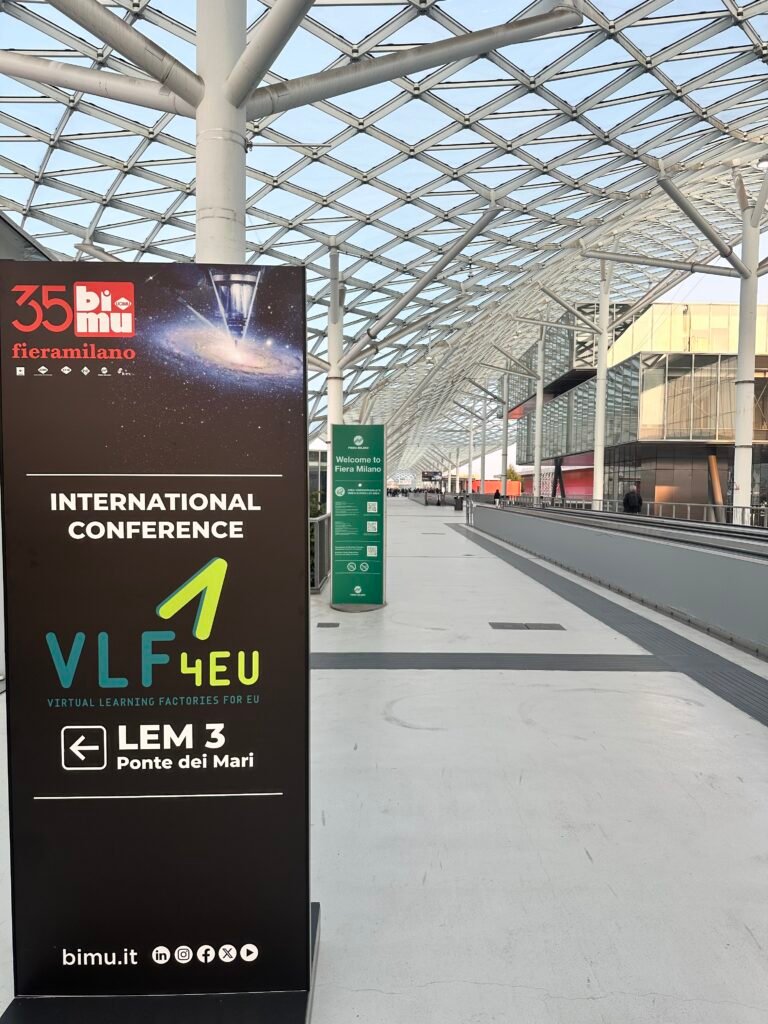
Morning: the skills gap and how virtual learning factories respond
Davide Della Bella, General Manager of UCIMU, and Kristian Sanz Bastida, Lifelong Learning Manager at IMH Campus, opened the conference. Introducing the project, Sanz Bastida described VLF4EU as a Centre of Vocational Excellence co-funded by Erasmus+, whose 13 partners from six countries, backed by 43 VET and HVET centres and more than 3,600 industrial companies, work to make virtual and augmented reality, digital twins and artificial intelligence a structural part of technical training rather than an occasional demonstration.
Sara Caballero and Josu Riezu of AFM then framed the challenge with the first version of the project’s report on competencies and skills gaps, based on 11 national and sectoral reports from Denmark, France, Italy, Slovenia, Spain and Sweden. The six countries converge on the same picture: industry is changing faster than training systems, jobs are evolving into hybrid profiles that combine technical, digital and green skills with transversal ones, and SMEs are the most exposed. The response they outlined for VLF4EU combines short, modular training, realistic practice without physical equipment and closer cooperation between VET centres and companies.
In his keynote “Virtual Worlds, Real Skills: Rethinking Education’s Impact on Competency Development”, Filippo Antonini of Sinergia discussed three applications. The first consists of 360° virtual tours that prepare new operators before they enter the production unit: in a pilot with 15 participants, the tours met high acceptance and gave a first positive signal on recall, while understanding and application did not improve, which points to the need for more guidance. The second is an AI-supported quality control system, tested on 13 industrial cases, in which the AI proposes and the operator decides; the third is an AI avatar that teaches in VR from the course material and answers learners’ questions.
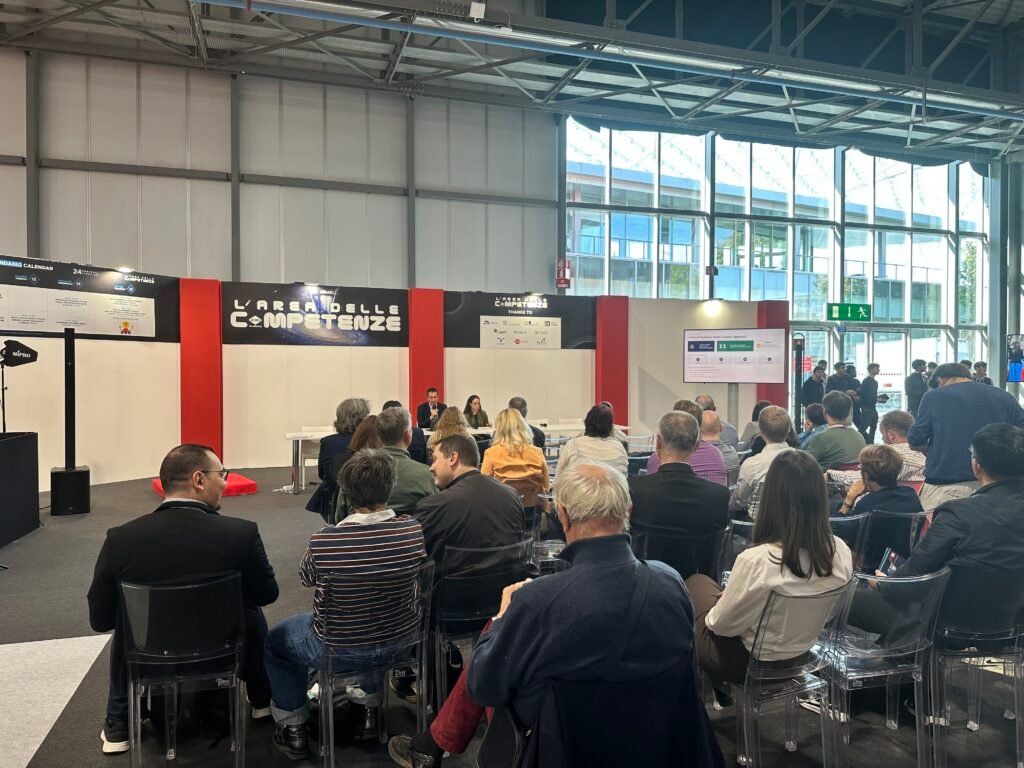
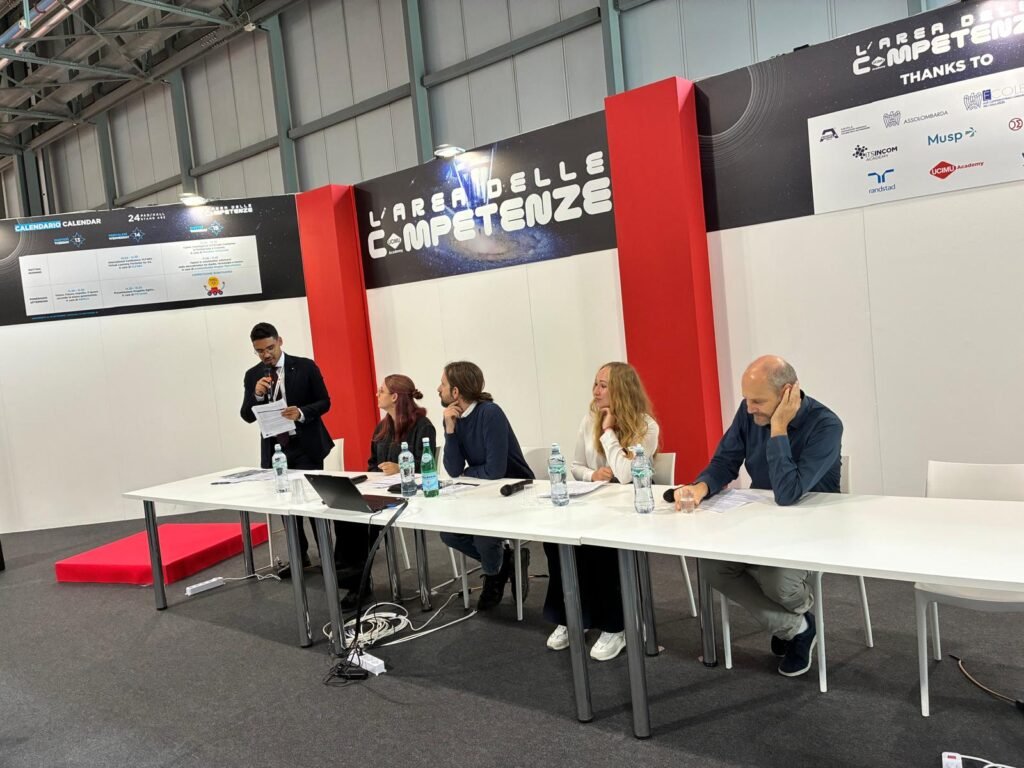
Massimiliano Annoni, Associate Professor at the Mechanical Engineering Department of Politecnico di Milano, give his presentation entitled “Digital twins and Education in Machining”. Drawing on the work of the PoliMill laboratory, he followed the digital machining workflow from parameter selection and tool path verification to the simulation of forces and collisions from G-code, and extended it to digital twins in metrology, knowledge graphs, machine vision, AI-assisted CAM and local language models that make company know-how available offline, before closing on the skills gap.
The plenary roundtable “Virtual Learning Factories in Practice: Schools, Learners and Companies Around One Table”, moderated by Luccas Portiolli of UCIMU, brought together Francesco Tosi, Educational and Course Coordinator at ITS Incom, Matelda Pelloni, AR/VR & Game Developer student at ITS Incom, Iryna Pushchak, Project Manager at Sinergia, and Luca Quaratino, Lecturer in Business Organization at IULM University, to close the morning session. Moving across four dimensions, namely infrastructure, pedagogy, teacher capacity and industry cooperation, the discussion compared the perspectives of a training institution, a learner, the companies and skills certification.
Afternoon: from demonstration to practice
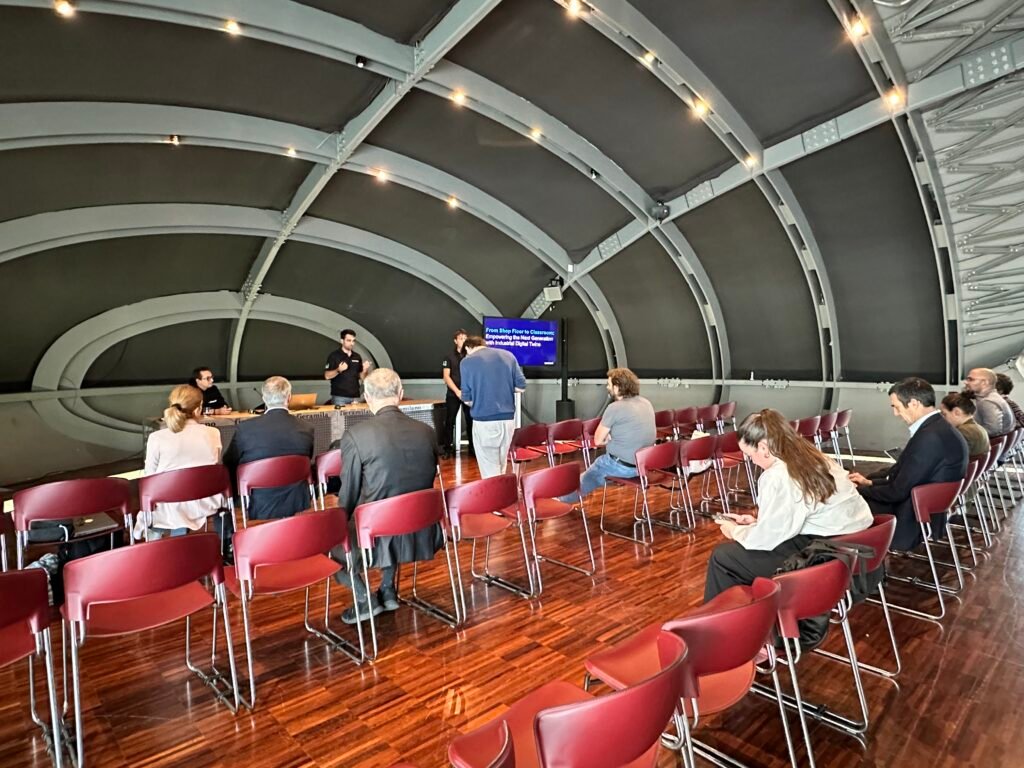
After a lunch break, participants moved to the LEM conference rooms. In Room A, Matteo Ghezzi, Giuseppe Mulè and Nicola Cescato of Siemens opened with “From Shop Floor to Classroom: Empowering the Next Generation with Industrial Digital Twins”, showing how Run MyVirtual Machine, a one-to-one digital twin of a CNC machine tool, allows operators and students to train without taking the real machine out of production. They described the experience with Politecnico di Milano at the Siemens Digital Experience Center in Piacenza, the Smart Labs approach already adopted by more than 40 technical schools and the Siemens CNC Challenge 2026, in which students solve real problems in real time.
At the same time, in Room B, Anders Vestergaard, René Bennyson and Anders Bod Lund of the Research Center for Industrial Digital Transformation at UCN led the session “Stakeholder-Engaged Design of Activities in Virtual Learning Factories”, on managing complexity through shared decisions on authentic skills, expectations and relevance.
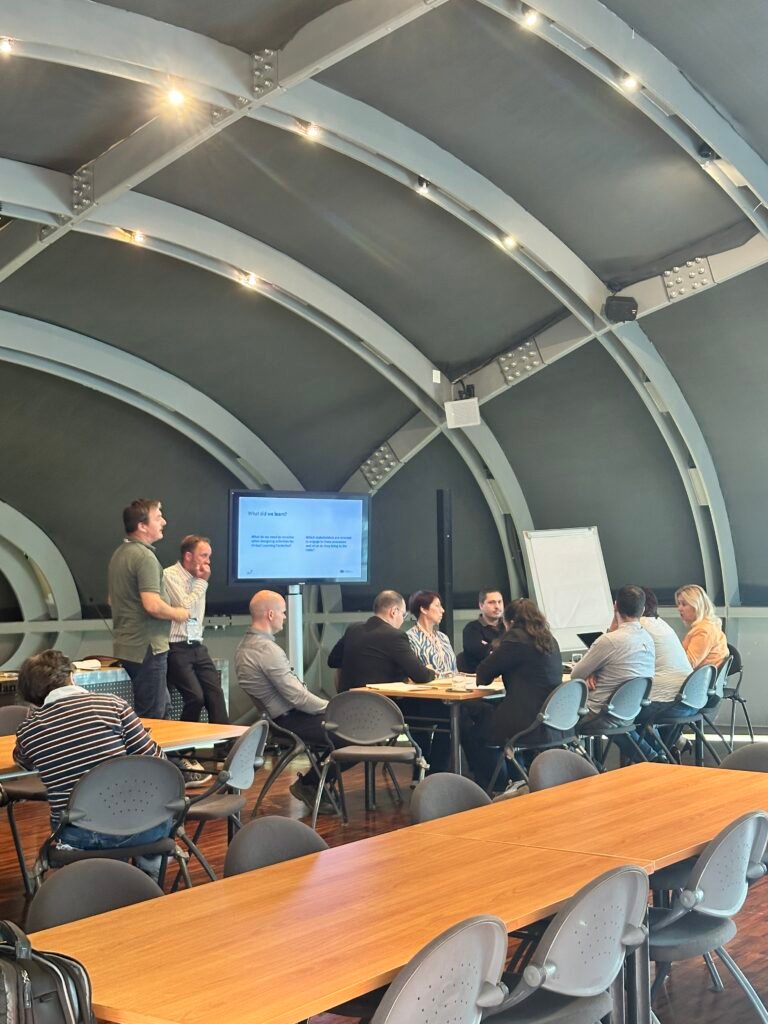
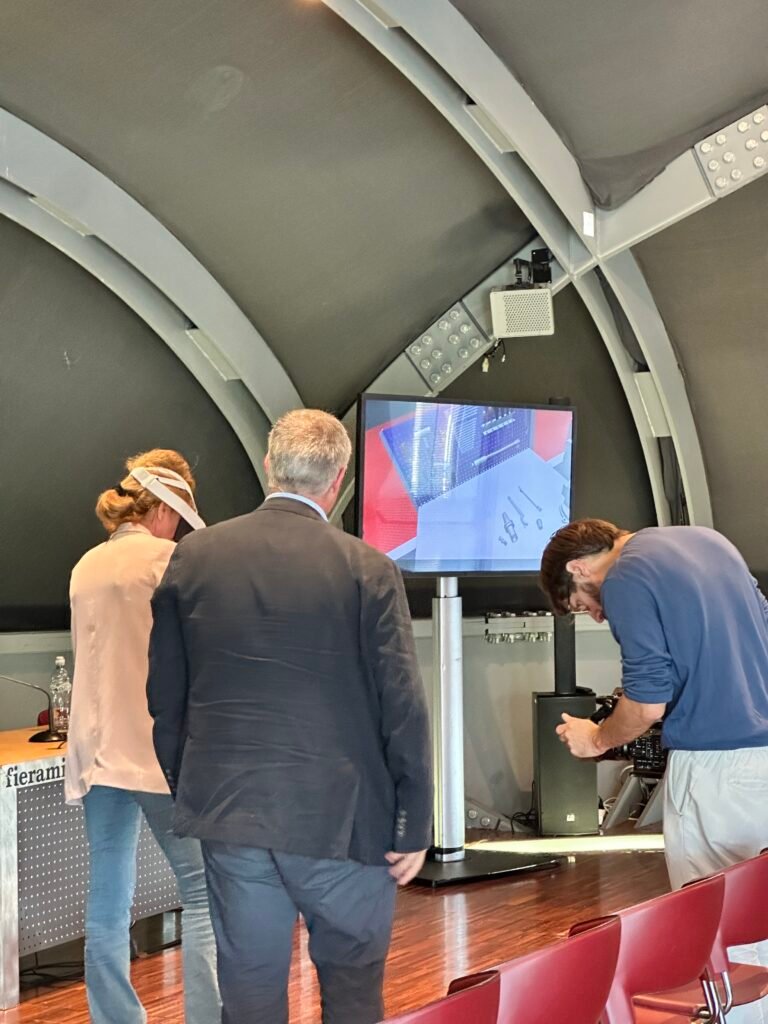
In the second slot, Ana Moya of Tecnalia and Kristian Sanz Bastida of IMH Campus focused on authoring tools for immersive experiences. KAYROX is a web platform that lets non-expert users create, publish and share such content through the browser, while the UPRAISE project is developing a virtual workshop in which learners prepare tools and fixtures for a CNC milling machine from a process sheet, with a guided practice mode and an evaluation mode, and in which teachers will be able to design their own exercises. Participants were invited to try the environment with a VR headset.
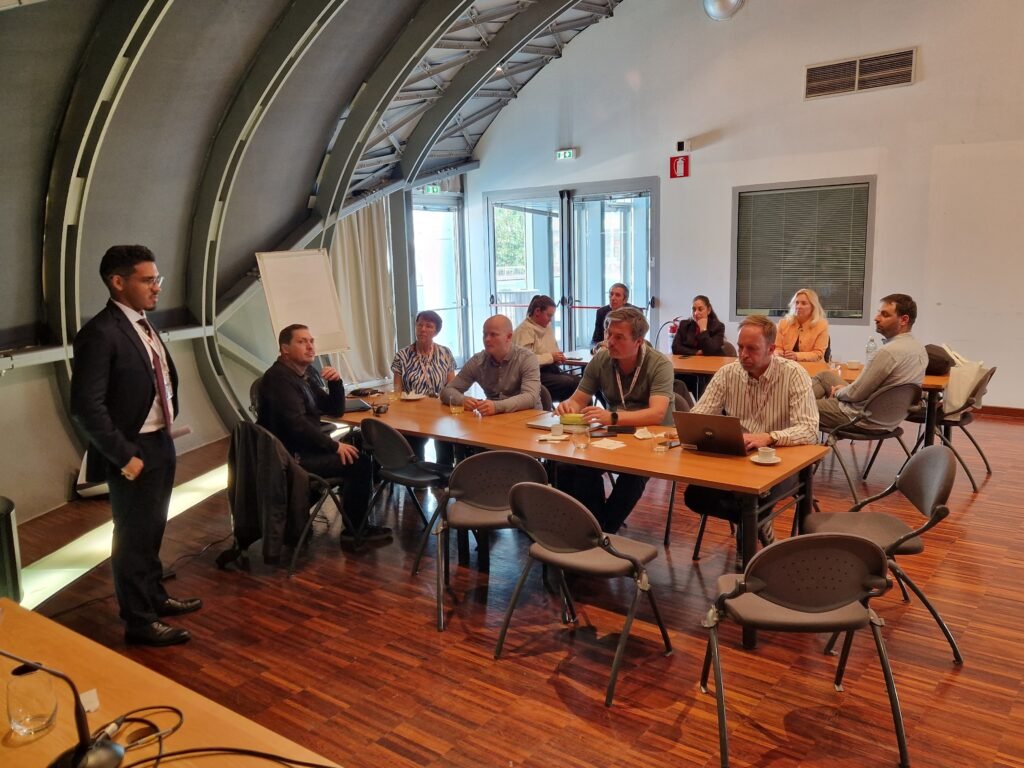
In Room B, Sylvain Noblecourt, Marc Lacomblez and Prométhée Toneatti of CESI LINEACT ran a workshop on the path that leads from a physical process to its digital model, shadow and twin.
Looking ahead
The day ended with a closing roundtable and conclusions led by UCIMU. The 1st International Conference marked the first public milestone of VLF4EU and opened its series of annual conferences; the next edition is planned for October 2027 in Copenhagen.