
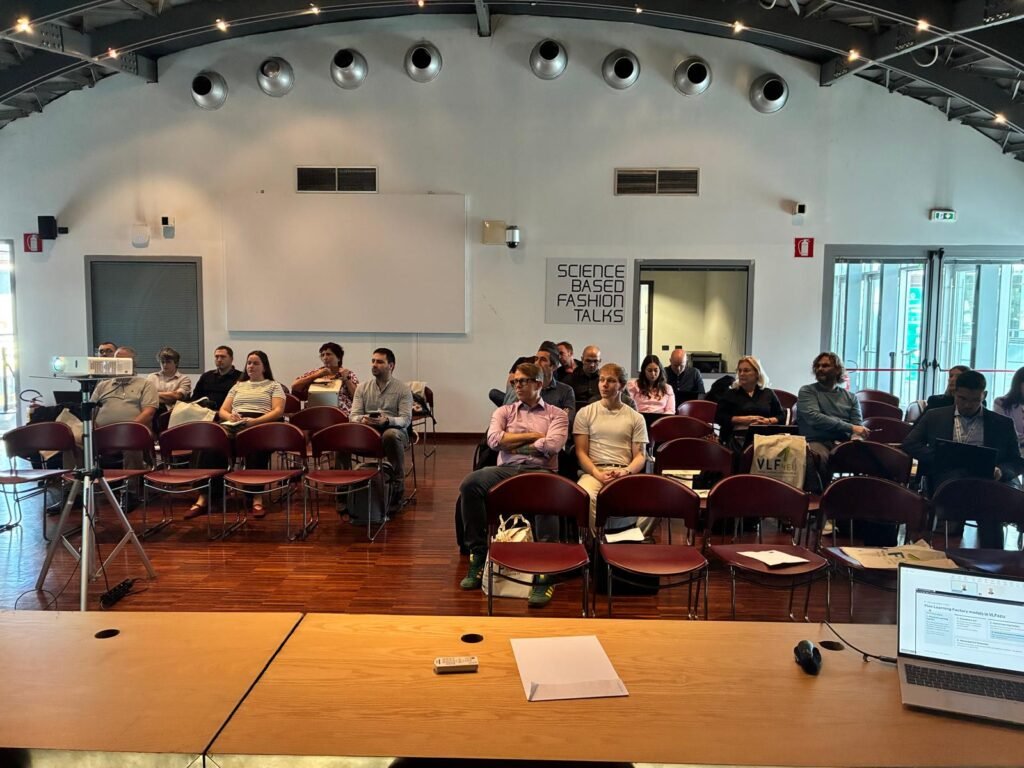
On 13 October 2026, partners of the VLF4EU – Virtual Learning Factories for EU project gathered at fieramilano Rho, near Milan, for the 21-month transnational meeting. Hosted by ECOLE – Enti Confindustriali Lombardi per l’Education, the meeting took place in the LEM conference rooms on the opening day of 35.BI-MU, the Italian exhibition of machine tools, robotics, automation and digital manufacturing. The location tied the internal work of the consortium to its public agenda: on the following day, the same venue hosted the 1st VLF4EU International Conference, organised by UCIMU-SISTEMI PER PRODURRE.
Deliverables and work packages under review
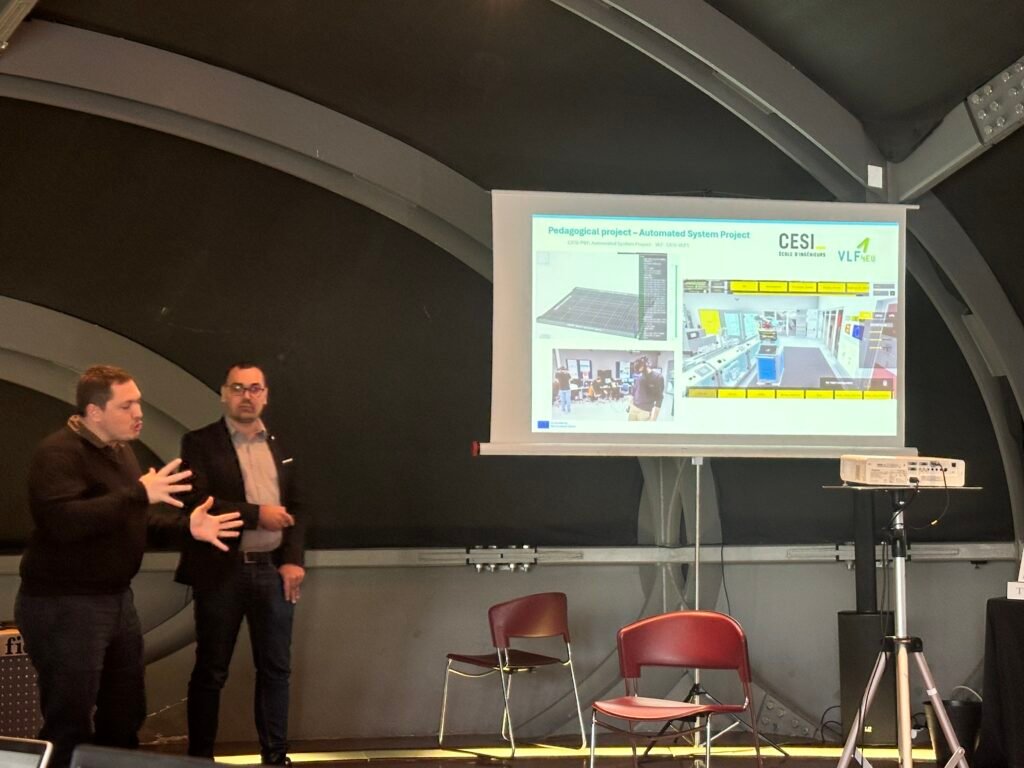
After the welcome by ECOLE, the morning was devoted to the reports due at this stage of the project. UCN – University College of Northern Denmark opened with the “minimum valuable VLF” and D3.1, the report on the key requirements for a systematic implementation of learning factories. INNOVAE and IMH Campus followed with the two WP5 deliverables: the Train the Trainers programme (D5.1), which prepares teachers to create immersive content and apply the VLF4EU pedagogy, and the micro-credentials (D5.2) developed to certify the skills acquired through the new learning modules. CESI École d’Ingénieurs then illustrated D4.1, the modular system architecture through which the learning factories will be virtualised and the pedagogical projects of each partner mapped.
The coffee break gave participants the chance to briefly join the opening ceremony of the fair. Back in the meeting room, AFM Cluster reported on WP2, covering the internal regulations of the VLF4EU Alliance, the annual meetings with European networks and the methodology for identifying skills gaps. UCN and GTC – Göteborgs Tekniska College outlined the progress of the WP3 toolkit, while CESI closed the morning with the WP4 data management plan.
Nine use cases, one discussion
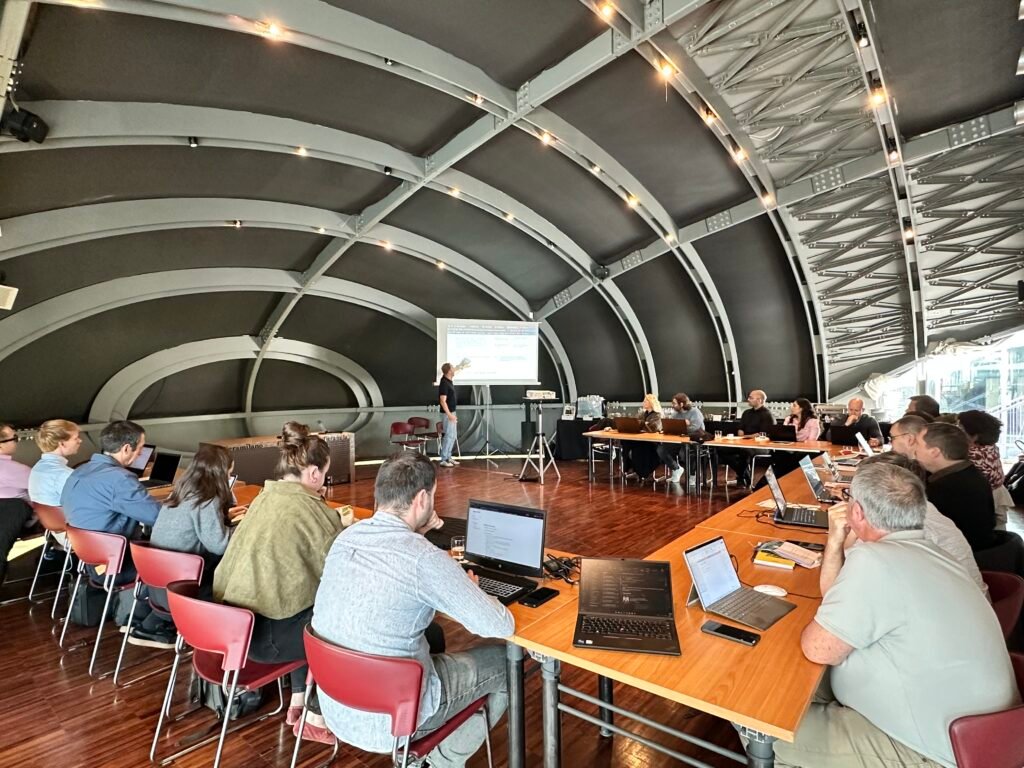
The afternoon focused on the use cases, the industrial scenarios that each partner will turn into virtual learning experiences. IMH Campus, UCN, GTC, CESI, SCSKZ – School Centre Slovenske Konjice–Zreče, ECOLE, INNOVAE, Logisnext and ELESAR each introduced the description of its use case in a short slot followed by a facilitated discussion, a format that allowed the whole consortium to examine every scenario and compare it with the others.
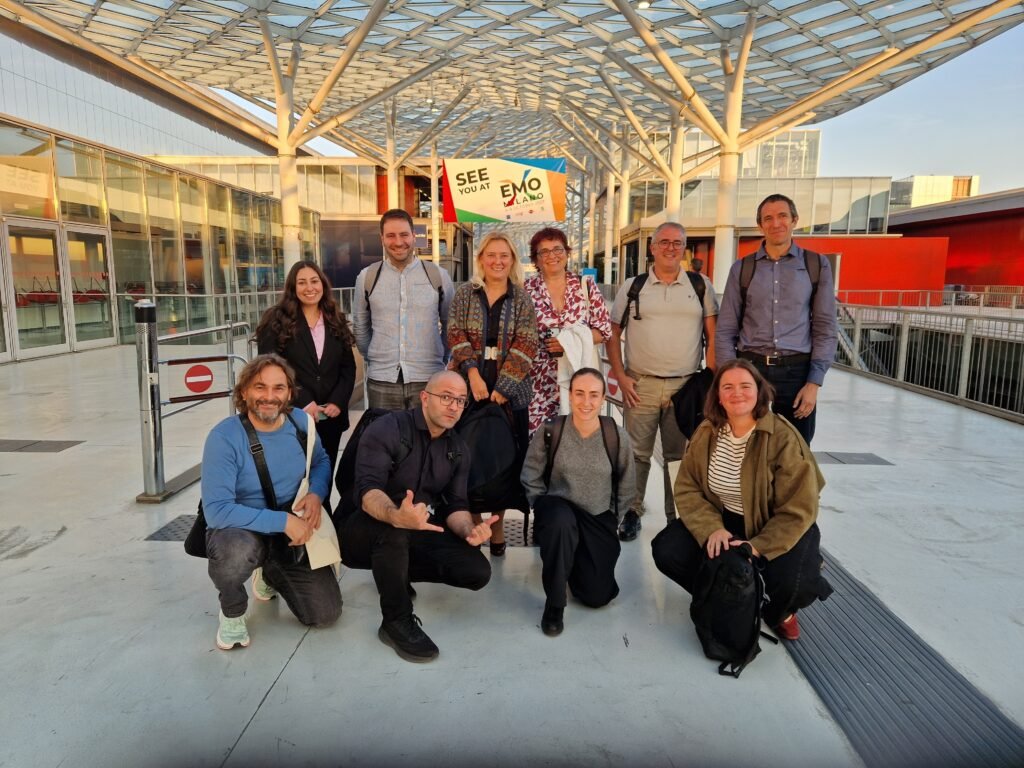
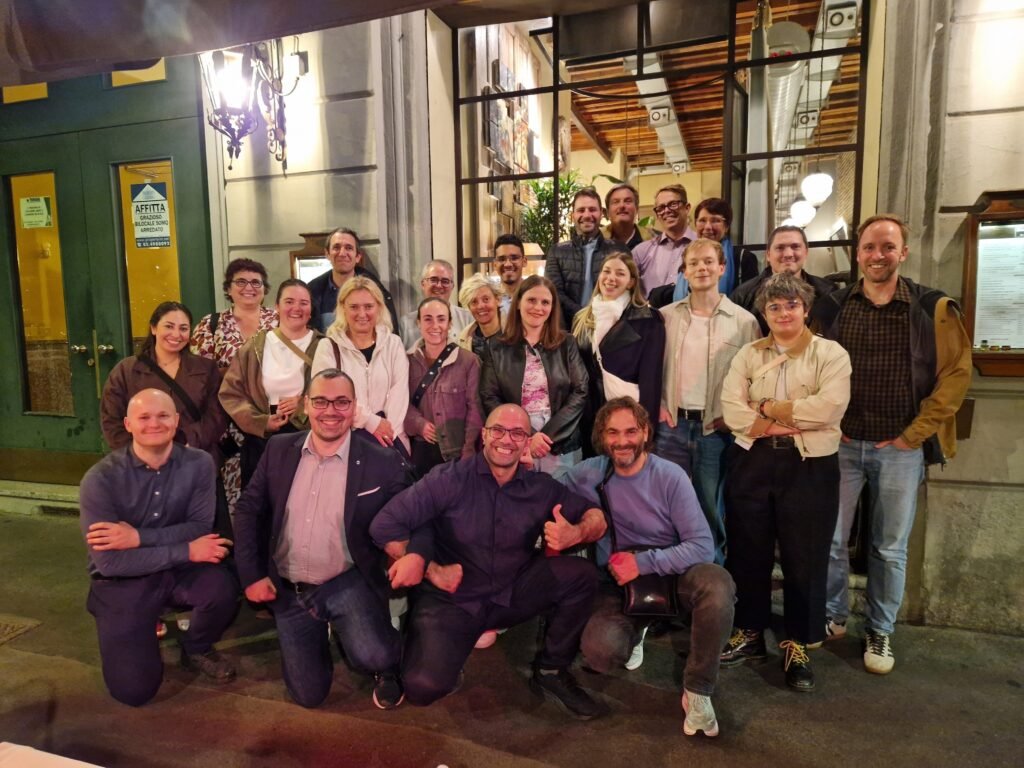
The work package sessions then resumed. ELESAR reported on WP6 and open innovation, the model through which companies will bring real challenges into the virtual learning factories, and UCIMU reviewed the WP7 dissemination activities in view of the conference. ELESAR closed the working day by summarising the discussion on the use cases, and the consortium met again in the evening for a dinner in Milan.
Looking ahead
At month 21 of its four-year duration, VLF4EU has documented its requirements, its teacher training programme and its micro-credentials, while the system architecture is taking shape; the use cases discussed in Milan are the ground on which partners will now build and test the platform content and the learning modules. The meeting also opened two days of project activity at 35.BI-MU, which continued on 14 October with the 1st VLF4EU International Conference, where the consortium shared its work with schools, companies and researchers from outside the partnership.